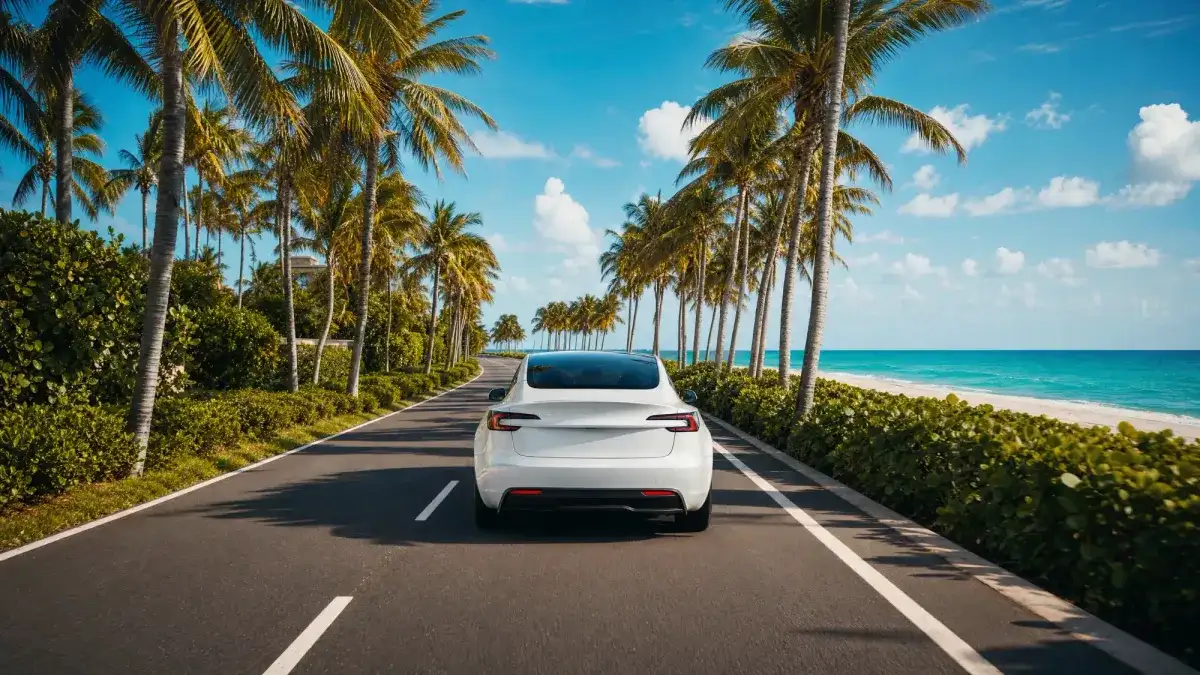
The 80/20 EV Charging Rule: How South Florida Drivers Use It
The 80/20 EV charging rule is the single piece of battery-longevity advice most owners actually need. This post explains what it is, why lithium-ion chemistry rewards it, and how South Florida heat, traffic, and tower density change the practical math.
The 80/20 EV charging rule is the single most useful piece of battery-longevity advice most owners ever need. Keep your battery between roughly 20% and 80% state of charge for routine daily driving, and only charge to 100% or run below 10% when you actually need the extra range. At Rapid Charge EV we see the results of both good and bad charging habits across thousands of South Florida service calls; this guide explains the rule, the chemistry behind it, and the specific ways South Florida heat, traffic, and tower density change the practical math.
What the 80/20 rule actually says
The rule has two parts. The first part: do not charge above 80% as a daily habit. The second part: do not run below 20% as a daily habit. Together they define a 60-point band where the battery chemistry sees the least stress over thousands of cycles.
Both halves matter. Most owners hear about the 80% ceiling and ignore the 20% floor, then wonder why their range estimate drifts. The 20% floor is just as real. Both ends of the curve are where lithium-ion cells age fastest. The middle is where they age slowest.
Why lithium-ion chemistry prefers the middle
Without going deep into cell chemistry, the practical version is this. A lithium-ion battery is at its most stable, both electrically and thermally, when it operates in the middle of its voltage range. Charging to the top end forces the cell into a higher-stress state. Discharging to the bottom end forces it into a different but equally stressful state. Repeated trips to either extreme, especially under heat, accelerate the gradual capacity loss that every battery experiences.
Manufacturers know this. That is why most EV charging apps default to an 80% daily cap and warn you before you go below 10%. The defaults are the manufacturer's quiet way of nudging you toward the rule without lecturing you about it.
Why South Florida heat changes the math
Heat is the second variable in battery degradation, and South Florida runs hot from May to October. Sustained high temperatures accelerate lithium-ion aging on their own. Heat plus a high state of charge accelerates it more. A battery sitting at 100% in a black asphalt lot in July is the worst-case combination for long-term capacity.
Three practical implications for South Florida drivers. First, the 80% ceiling matters more here than it does in Boston or Seattle. Second, garage parking, when you can get it, is a real battery-life benefit, not just a comfort feature. Third, scheduling charges so the battery is not sitting full in afternoon heat helps, especially for condo and tower residents who charge during overnight off-peak hours.
For the full picture of how heat affects range across our specific service area, the South Florida range anxiety guide covers 12 commute scenarios and the real-world range math for each. Heat is the dominant variable in most of them.
When to break the 80% ceiling
The 80% rule is for daily driving, not for trip days. There are situations where 100% is the right charge level.
Long road trips: leaving for the Keys, Orlando, or Tampa with a route that requires full battery range to reach the first reliable charger.
Hurricane prep: full charge before a storm gives you mobility and household backup options if your vehicle has V2H capability. The hurricane prep guide covers this in detail.
Anticipated heavy use: an event day where you know you will be driving across the metro multiple times.
Calibration drives: some vehicles benefit from an occasional full charge to recalibrate the battery management system. Once a month is fine; daily is not.
The key is that 100% charges should be intentional and time-limited. Charge to 100% on the morning of your trip, not the night before. Do not let the battery sit at 100% for hours longer than necessary.
When to break the 20% floor
The 20% floor is harder to enforce because life happens. Traffic stretches. Charging plans break down. Sometimes you find yourself at 12% with 15 miles to home. That is not the end of the world for the battery if it is occasional.
What is harmful is routine deep-discharge. If you are regularly arriving home at 5% or 8%, your daily pattern is too tight. The right response is not to push harder; the right response is to charge more often. Plug in at workplace charging, top up midday when you can, or schedule a recurring mobile visit so you are starting each day in the 60 to 80 percent range instead of the 30 to 50 percent range.
If you are routinely below 20% in a way that does not match your daily mileage, something is off with your charging routine. That is a planning conversation, not a hardware problem. Our complete guide to mobile EV charging covers how scheduled service fixes exactly this pattern.
Two exceptions worth knowing about
The 80/20 rule is the default for most modern EVs, but two exceptions are worth flagging.
LFP batteries
Lithium iron phosphate (LFP) batteries, used as of 2026 in some Tesla Model 3 and Model Y trims and several other modern EVs, are chemically different from the more common nickel-based packs. LFP cells tolerate full charges better and most manufacturers actually recommend charging LFP cars to 100% on a regular basis so the battery management system can stay calibrated. If your vehicle has an LFP pack, follow your manufacturer's guidance, which will probably tell you to charge to 100% at least weekly.
Vehicle charge-limit settings
Tesla and most other modern EVs let you set a daily charge limit in the app or in-car settings. Set yours to 80% (or whatever your manufacturer recommends for daily use) and forget it. The vehicle stops charging at that level automatically. This is the single easiest way to follow the rule without thinking about it.
How South Florida drivers actually use the rule
Generic guides give you the rule and stop. The real-world version in our service area looks like this.
Brickell, Aventura, Edgewater, and Sunny Isles condo residents who use Rapid Charge EV's scheduled service typically run a 30 to 75 percent band. We deliver charge once or twice a week, the battery never sees a 100% state, and the chemistry is happy.
Drivers with installed home chargers in Coral Gables, Pinecrest, Weston, and Boca Raton run a 40 to 80 percent band overnight, with the in-app charge limit set at 80%. They go to 100% only on trip days. Their batteries are the longest-lasting in our customer base, based on what we see in routine service.
Snowbirds and seasonal residents are the trickier case. They tend to leave the vehicle plugged in for months at high state of charge while they are out of state. That is the worst pattern for battery longevity. The fix is to set the charge limit to 50% when the vehicle is going to sit, and to give the battery a real exercise cycle (drive it 20 miles, let it drop, recharge) every few weeks. Our snowbird EV charging guide covers the storage pattern in detail.
Fleet operators in Doral, Medley, and the Hialeah industrial corridors run a tighter band, often 20 to 60 percent, because their vehicles are in rotation. The 80% ceiling matters less when the battery is rarely sitting full; the bigger concern is keeping the bottom from dropping too low between shifts.
The mobile charging connection
Mobile EV charging is structurally aligned with the 80/20 rule. A typical visit lands customers in the 30 to 80 percent range, which is the band the chemistry actually wants. We are usually delivering top-up energy, not full-to-100 charges. That is true for our scheduled home and condo service and for our emergency mobile charging calls alike.
Drivers who use mobile dispatch as part of a regular routine, weekly or bi-weekly top-ups, end up with batteries that sit in the healthy band by default. There is no special discipline required; the service model does the work for you.
Bottom line
The 80/20 rule is real, the chemistry is real, and the long-term capacity benefits are real. Set your charge limit to 80%, plan your routine so you rarely drop below 20%, charge to 100% only on intentional trip days, and avoid leaving the battery sitting full in afternoon heat. That single habit does more for battery longevity than any other change you can make to your driving.
If your current routine does not fit the band and the battery is already low, call Rapid Charge EV at (954) 278-4454 or email support@myrapidchargeev.com. We dispatch across Broward, Miami-Dade, and Palm Beach 24/7.
Frequently Asked Questions
What is the 80/20 EV charging rule in one sentence?
Keep your EV's lithium-ion battery between roughly 20% and 80% state of charge for routine daily driving, and only go to 100% or below 10% when you actually need the extra range. The 60-point band in the middle is where the battery chemistry is happiest and where capacity loss is slowest over the life of the vehicle.
Will I damage my battery if I charge to 100% sometimes?
No. A 100% charge before a long road trip is fine. What hurts the battery is sitting at 100% for long periods, especially in heat, and doing it as a daily routine. The 80/20 rule is about your normal pattern, not about occasional trip days.
Does the 80/20 rule apply to LFP batteries too?
Not exactly. Lithium iron phosphate (LFP) batteries, used as of 2026 in some Tesla Model 3, Model Y, and several other EVs, are chemically different. Most manufacturers actually recommend charging LFP cars to 100% regularly so the battery management system can recalibrate. Check what chemistry your vehicle uses. For nickel-based packs (most non-LFP EVs), the 20 to 80 band is the right default.
Does South Florida heat actually matter for battery wear?
Yes, more than most generic guides admit. Sustained high temperatures accelerate lithium-ion degradation. A battery routinely held at 90 to 100% in a black parking lot in July loses capacity faster than the same battery cycled 20 to 80 in cooler conditions. Heat plus high state of charge is the worst combination, and South Florida summers are exactly that combination.
Range anxiety isn't abstract in South Florida. It's specific routes, specific traffic, specific charging gaps. Here are the 12 scenarios we get the most calls about and the strategy for each. Call (954) 278-4454.
Apartment hunting with an EV changes the checklist. Here is where charging-equipped buildings actually cluster in South Florida, the exact questions to ask a leasing office, and the fix when your building offers nothing. Call (954) 278-4454.
After thousands of mobile EV charging dispatches in South Florida, the same misconceptions keep coming up. Here are ten of them, addressed honestly. Call (954) 278-4454.