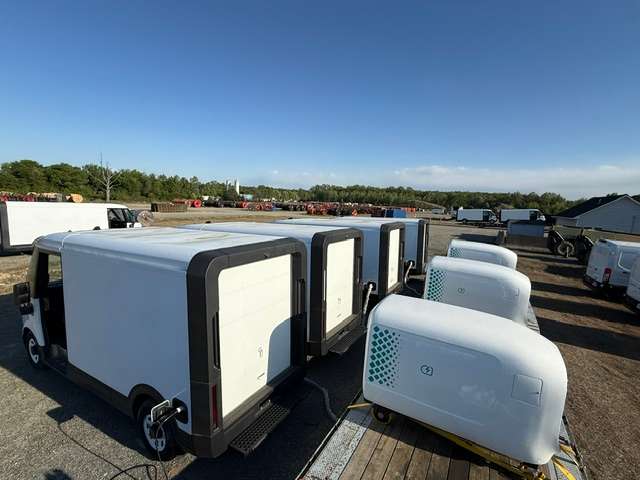
Miami-Dade's commercial EVs work the hardest in South Florida: delivery routes through impossible density, rideshare shifts that never end, port and airport operations on the clock. This is how mobile fleet charging serves the county's business layer.
No county in Florida works its commercial vehicles harder than Miami-Dade: last-mile vans threading Brickell loading zones, rideshare EVs running eighteen-hour duty cycles, freight operators circling PortMiami and the airport, dealer lots holding a hundred EVs at a time. Rapid Charge EV's fleet operation serves this layer county-wide, and the Miami-Dade version is shaped by one fact above all: this county's commercial vehicles have nowhere convenient to plug in.
The county's commercial EV landscape
The geography concentrates hard. Doral and Airport West hold the warehouse economy: distribution, freight forwarding, e-commerce fulfillment, the densest cluster of commercial EV adoption in the county. Hialeah and Medley add the industrial mass, machine shops, wholesalers, working fleets in working neighborhoods. Downtown and Brickell generate the delivery density itself: every tower is a delivery destination, and the vans serving them stage wherever they can.
Layered over the map: the rideshare economy, thousands of high-mileage EVs concentrated around MIA, the urban core, and the beach; the port's orbit of drayage-adjacent and provisioning businesses; and the dealer rows holding EV inventory that drains as it sits. Each runs a different duty cycle; all share the charging bottleneck.
How mobile fleet charging works in this density
The overnight depot cycle anchors here as everywhere: the truck visits your Doral or Medley yard in the dead hours and brings the line to target before rollout. Miami-Dade adds two local variants. The staging-lot pattern serves vehicles that never return to a central yard, the truck meets them where they cluster between runs, a lot near MIA, a downtown garage level the operator controls. The inventory pattern serves dealers: weekly passes through the lot keeping every EV demo-ready.
Equipment and capability are the same as our consumer service, every US connector, DC fast delivery from self-contained trucks, documented in the equipment walkthrough, scaled to multi-vehicle sequencing. The formal service shape lives on the fleet charging page.
The fastest way to scope a Miami-Dade fleet arrangement is a ten-minute call to (954) 278-4454 with your yard or staging address, vehicle count, and shift pattern; the dispatcher will sketch the cadence and set up a pilot week.
Mobile vs building a depot, the honest version
If you own your Doral warehouse, run heavy fixed mileage, and are committed to electric for the long haul, installed depot charging eventually wins on economics, and we will say so in the first call. The county's realities push the other way more often than owners expect: most warehouse space here is leased, landlord-permission and buildout timelines are long, FPL service upgrades in the industrial districts queue for months, and the delivery economy's margins do not love capital projects.
Mobile carries the cases the build cannot: the leased yard, the install gap, the pilot fleet, the seasonal surge (think cruise-season provisioning or holiday delivery peaks), and the permanent overflow where six installed chargers serve a twenty-vehicle line.
Pilot week: overnight or staging-lot visits calibrated against your real operation, with timing adjusted nightly.
Standing cadence: nightly to weekly depending on duty cycle, single dispatch contact, text-level flexibility.
Surge protocol: a pre-agreed way to add capacity for peak weeks without renegotiating anything.
Duty cycles across Miami-Dade, profile by profile
The Doral warehouse van fleet is the canonical case: out at dawn, 90 to 150 urban miles threading delivery windows, back by early evening. The overnight yard cycle covers it with margin, and the operational gain compounds, no driver detours to public stations mid-route through Miami traffic, which is its own payroll line.
Downtown service fleets, building maintenance, security patrols, courier runs based out of the urban core, log fewer miles in worse traffic. Their cadence lands lighter (alternate nights, sometimes weekly), and their constraint is parking, not energy: the staging-lot session at a controlled garage level is the pattern that fits.
The dealer rows run an inventory cycle, not a duty cycle: EVs drain on the lot at vampire rates, demo cars need showroom-ready batteries, and the weekly lot pass keeps the line sellable. It is the least glamorous fleet work in the county and among the most appreciated.
Port and airport-orbit operators, provisioning, freight-forwarding runabouts, crew shuttles, work the clock hardest: split shifts, overnight turnarounds, vehicles that rest in fragments. Their arrangements get built around the facility's actual quiet hours, sometimes two short visits instead of one long one, and those are the conversations where the dispatcher earns the title.
What Miami-Dade operators ask before signing on
Can the service keep pace with growth? The honest answer is that the arrangement scales in vehicles and visits, not in promises: a five-van pilot that becomes a fifteen-van operation gets re-scoped, re-sequenced, and sometimes split across nights, and the conversation happens before the growth strands anyone. Operators planning expansion should say so at scoping; the cadence designed for the fleet you will have beats the one designed for the fleet you had.
What about security, insurance, and facility rules? Standard scoping items: certificates exchange, access protocols get written down, and gated or monitored yards in Medley and Doral run exactly like open ones once the paperwork settles. The county's facility managers have seen every vendor pattern there is; ours slots into the existing playbook rather than demanding a new one.
The Miami-Dade fleet bottom line
This county's commercial EV math is simple: vehicles that move make money, vehicles that queue at public stations do not, and depots that need a year of permitting do not help this quarter. Delivered fleet charging is the bridge, and for the leased-yard majority, the destination. County-wide context lives in our Miami-Dade mobile charging guide; the event-surge variant is covered in the events charging post.
If you want your Miami-Dade fleet, warehouse line, staging lot, or dealer row charged without construction, call Rapid Charge EV at (954) 278-4454 or email support@myrapidchargeev.com. We dispatch across Broward, Miami-Dade, and Palm Beach 24/7.
Frequently Asked Questions
Can you charge fleet vehicles at Doral warehouses overnight?
Yes, the Doral and Airport West warehouse district is the densest fleet-charging zone in our Miami-Dade operation. Overnight yard cycles are the standard arrangement: the truck works through your vehicle line during the dead hours and the fleet rolls out charged.
Do you support rideshare drivers, who are fleets of one?
The fleet program is built for multi-vehicle operators, but high-mileage individual drivers fit the scheduled-service model well: a standing driveway or staging-lot session timed to your shift pattern. Either way, the dispatcher will route you to the right arrangement honestly.
Can you operate inside port or airport-adjacent facilities?
We service fleets at privately controlled yards and lots around PortMiami and MIA, the freight-forwarder and logistics properties that ring both. Operations inside secured port or airfield zones depend on the facility's own access rules; we coordinate with your operations team on what the property allows.
What about dealership inventory in the auto rows?
Inventory charge management is a standing Miami-Dade pattern: EVs on dealer lots drain while they sit, and delivered charging keeps the line test-drive ready without shuttling cars to public stations. Multi-point lots along the major auto corridors run this on a weekly cadence.
In Miami-Dade, scheduled mobile charging is a tower service: weekly deck visits, valet handoffs, sessions that run while you're forty floors up. How the standing arrangement works. Call (954) 278-4454.
Broward's commercial EVs run logistics corridors, service routes, and port-adjacent schedules. Mobile fleet charging keeps them moving without a depot construction project. Call (954) 278-4454.
Palm Beach's business fleets are service fleets: property management, clubs, hospitality, contractors. Mobile charging keeps them electric without anyone building a depot. Call (954) 278-4454.