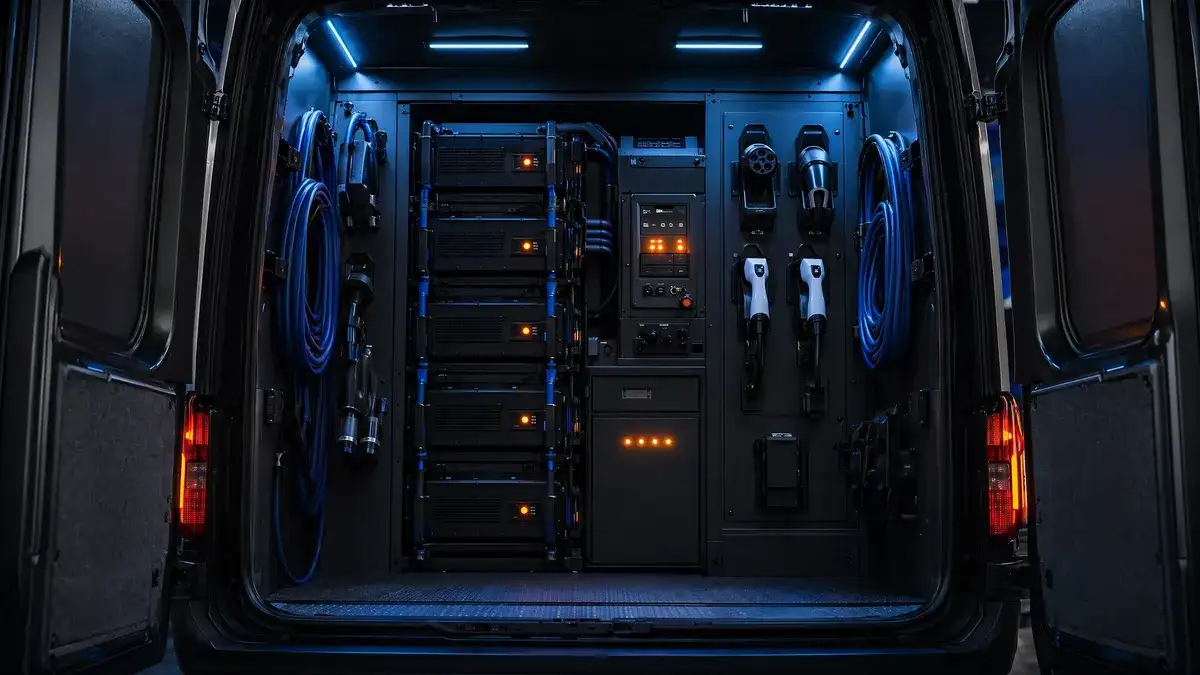
One of the county's most distinctive cities is also one of its least served. The delivered answer for the avenue, the home blocks, and the industrial west.
Opa-locka's founders gave it a skyline out of a storybook, Moorish domes and minarets on the city hall, streets named from the Arabian Nights, and the decades since gave it a harder economic story. The EV era arrived here the way it arrives in every working city: through the used market, one practical purchase at a time, with no infrastructure following behind. The city's public charging inventory is zero in any meaningful sense. Who provides mobile EV charging in Opa-locka, where the map shows nothing at all? Rapid Charge EV does, under the domes and down the avenue, 24 hours a day.
The city's entry is our Opa-locka service page. This is the street-level version: how EVs actually live in a city the charging networks skipped, and why the delivered session is not a luxury here but the entire infrastructure.
Skipped by the buildout
The charging networks build where the spreadsheets point, and the spreadsheets have never pointed at Opa-locka. The county's gaps are mapped honestly in our Miami-Dade charging deserts post, and this city is one of its starkest cases: real EV adoption, driven by fuel math on tight budgets, meeting a public inventory of nothing. Drivers here charge at work when a job allows it, at relatives' houses, at stations in Miami Gardens or Hialeah that cost a trip and a wait. Every routine has a single point of failure, and a city with no fallback turns one failure into a stranded week.
The NW 27th Avenue corridor: the spine, the bus routes, and the steadiest calls.
The residential blocks around city hall and Opa-locka Boulevard: curb sessions on storied streets.
The industrial west and the executive airport's edge: work vehicles and yard calls.
The economics of the calls
Opa-locka's EVs are working assets. They carry their owners to jobs across the county, run gig shifts, and stretch household budgets that chose electric precisely because fuel money mattered. The fleet skews older: earlier-generation cars with shorter original ranges and batteries with history, which makes the margins thinner and the failures sharper. The delivered session meets that reality on its own terms: a curb or lot visit, every connector family aboard including the older standards, 15 to 45 minutes to a margin that finishes the week. The dispatcher confirms equipment for early-generation models on the call, so the truck arrives already right.
The industrial west adds the commercial layer: warehouses and shops around the executive airport whose vans and service vehicles are going electric on operating math. A work vehicle that missed its overnight charge gets fixed in the yard before the route starts, on the business's clock.
The commuter layer runs through the rail and bus connections that knit the city to the county's job centers. Park-and-ride cars sit all day at the station lots, gig drivers stage between runs along the avenue, and both discover at day's end that parked is not the same as charged. The session meets the car where the workday left it, and the evening proceeds on schedule.
What a no-network dispatch looks like
In a city with no stations, there is no queue to skip and no app to argue with; there is an address, a car, and a percentage. The truck dispatches from the north Miami-Dade zone, the same coverage that serves the neighboring cities, and works at the curb, the apartment lot, or the driveway. Nothing about the city's infrastructure deficit slows the visit, because the visit never depended on the city's infrastructure. That independence is the entire design.
There is also a pride layer to the city's story that the infrastructure maps never capture. The historic core's streets, Sharazad, Ali Baba, Sesame, carry names no other city in America has, and households here maintain their blocks with the stubbornness of people who know what they have. The EV era is arriving on those blocks the way every improvement has: household by household, on family math, without waiting for permission. The charging follows the same path, delivered to the curb, one practical visit at a time.
The alternatives, priced in time
The drive to another city's charger costs range, a wait, and the better part of an evening. The tow costs more and ends at the same busy pedestal. Emergency mobile charging costs a phone call and arrives where the car already is, which in a city the networks skipped is the only arithmetic that works. The domes have watched the city improvise for a century; this fix, at least, comes to them.
If your EV is empty on NW 27th Avenue, parked at a building with nothing to offer, or needed for tomorrow's shift, call Rapid Charge EV at (954) 278-4454 or email support@myrapidchargeev.com. We dispatch across Broward, Miami-Dade, and Palm Beach 24/7.
Frequently Asked Questions
Is Opa-locka genuinely in the coverage area?
Fully. The city sits inside the north Miami-Dade response zone, and the truck dispatches to the block, the lot, or the yard like anywhere else in the county.
Can you charge work vehicles on the industrial west side?
Yes. Yard and lot sessions for vans and work EVs run on the businesses' schedules, early shifts included.
There are no stations here at all. What is the realistic backup plan?
That absence is exactly why the delivered session exists: the truck is the backup plan, at the curb, without the drive to another city.
North Dade's largest city hosts the county's biggest event surges and lives a working-suburban life between them. Here is who charges both versions of Miami Gardens. Call (954) 278-4454.
Batteries do not die on a schedule. Here is how 24-hour mobile EV charging works across Jacksonville, from 2 AM stadium-district calls to sunrise at the Beaches. Call (954) 278-4454.
Fort Lauderdale rents and stacks: Flagler Village apartments, Las Olas towers, beach condos. Here is where EV charging actually exists in that stock, and the fix when your building offers nothing. Call (954) 278-4454.