EV Charging Adapters Explained: NACS, CCS1, and Safety
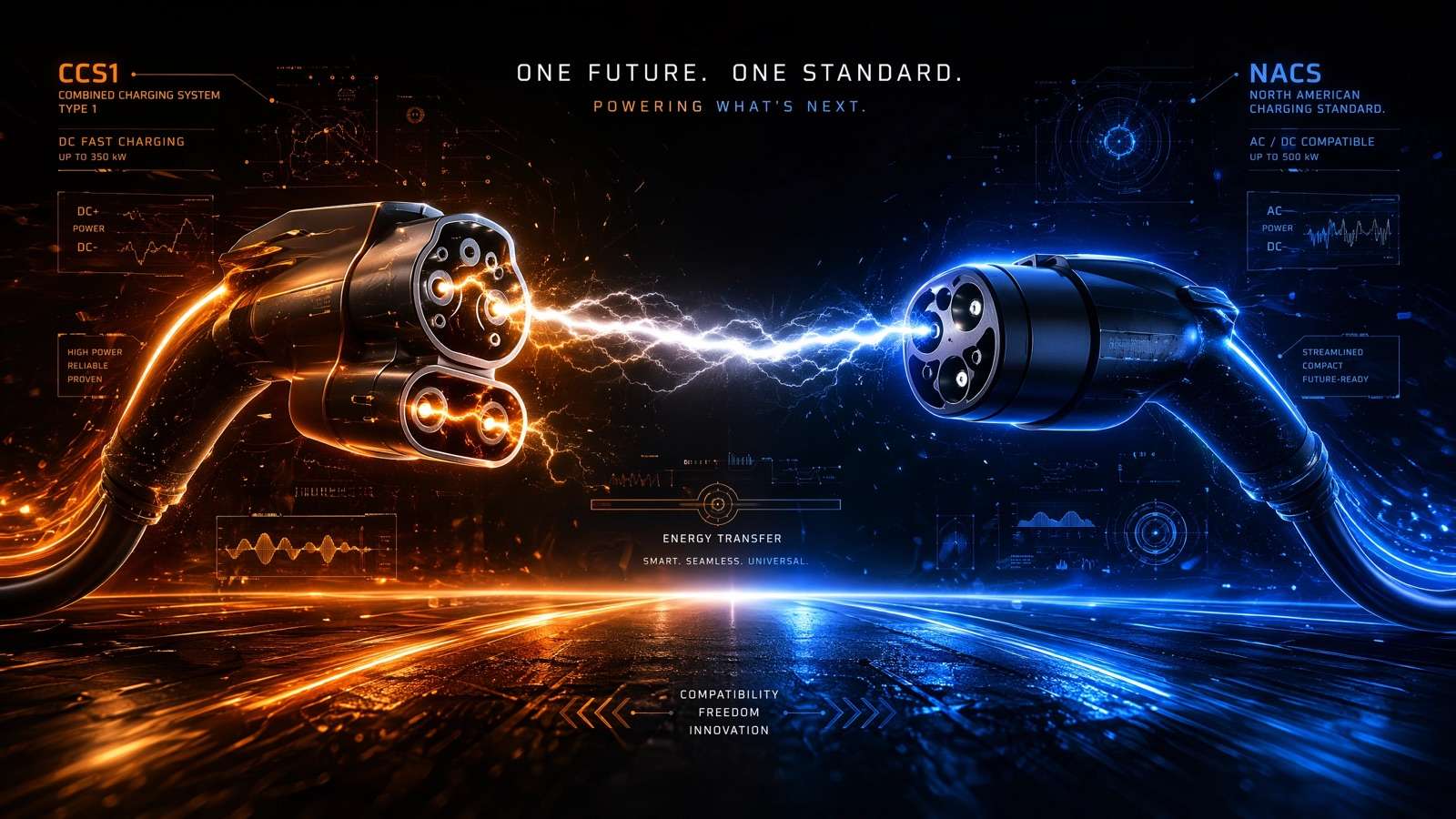
Adapters are what make the industry's connector transition painless, letting CCS1 cars into Superchargers and NACS cars onto legacy stations. But an adapter carries the full power of a fast charge through hardware you chose yourself, so choosing well matters.
Adapters are the unsung heroes of the great connector transition: small metal bridges that let yesterday's port use tomorrow's station. Used well, they roughly double the fast-charging stalls available to you in South Florida. Used badly, they are the weakest link in a 150 kW circuit. This guide sorts the good from the dangerous. And if you would rather skip the station entirely, our emergency mobile EV charging service plugs in natively, no adapter involved, at (954) 278-4454.
The Three Adapters That Matter
NACS adapter for CCS1 cars: the Supercharger unlock. Your CCS1 port accepts the small NACS cable through the adapter, opening Tesla's network. Ford, GM, and Rivian shipped approved units to owners during the transition.
CCS1 adapter for NACS cars: Tesla's CCS Combo 1 adapter, letting Teslas and other NACS vehicles fast-charge at Electrify America, EVgo, and every other CCS1 network.
J1772 adapter for NACS cars: the little AC adapter included with every Tesla, bridging any public Level 2 station or home J1772 charger to the NACS port.
Which Direction Do You Need?
Start from your port, which our brand-by-brand port guide maps in one list. CCS1 drivers, from a Mach-E to a BMW i4, want the automaker's NACS adapter in the trunk. NACS drivers want the J1772 adapter always, and the CCS1 fast-charge adapter if road trips leave the Supercharger corridor. Buying the adapter your automaker validated is not brand loyalty, it is the unit tested against your car's exact charge curve.
A DC fast charge can push 300 to 500 amps through an adapter's contacts. Certified adapters are engineered and tested for that current with proper latching, temperature monitoring paths, and materials that do not soften under sustained heat. The cheap lookalikes sold online skip exactly those things, and the failure mode is not theoretical: overheated adapters have fused to charge ports and ended charging sessions with repair bills. Three rules keep you safe:
Buy automaker-supplied or certified name-brand adapters only, and register them for recall notices.
Never stack adapters. One adapter between cable and port is the design limit; two is an experiment you run at your own expense.
If an adapter ever feels hot to the touch after a session, retire it and let a technician inspect the port before your next fast charge. Port damage is one of the failure modes our charge port troubleshooting guide covers in depth.
The South Florida Reality
Adapter access effectively doubled fast-charging capacity for CCS1 drivers from Sunrise to Pompano Beach, because Tesla's Supercharger footprint here is dense and reliable. The practical upgrade for most owners is not a new car, it is the right adapter and the discipline to keep it in the trunk rather than the garage.
When no station or adapter can help because the battery is already flat, call Rapid Charge EV at (954) 278-4454 or email support@myrapidchargeev.com. We dispatch across Broward, Miami-Dade, and Palm Beach 24/7.
Frequently Asked Questions
What adapter lets my EV use Tesla Superchargers?
A NACS adapter, sometimes called a DC NACS-to-CCS1 adapter. Ford, GM, Rivian, and most brands shipped approved versions to their owners, and the automaker-approved unit is the one to use because it is validated for your vehicle's full charging power.
Can a Tesla use a CCS1 charging station?
Yes, with Tesla's CCS Combo 1 adapter, which lets NACS-ported vehicles fast-charge at Electrify America, EVgo, and other CCS1 stations. For Level 2, a simple J1772 adapter comes with the car and handles any public AC station.
Are cheap third-party EV adapters safe?
Treat unknown brands as a real risk. A DC fast charge pushes hundreds of amps through the adapter, and uncertified units have melted latches and damaged charge ports. Stick to automaker-supplied or certified name-brand adapters and never stack two adapters together.
Does mobile charging require any adapter?
No. Rapid Charge EV's mobile units natively carry NACS, CCS1, and CHAdeMO connectors, so the technician plugs straight into your port with no adapter in the chain, anywhere in Broward, Miami-Dade, or Palm Beach County.
One plug is compact and came from Tesla. The other is bulky and powered everyone else for a decade. Here is what is physically and electrically different between NACS and CCS1, and why the industry switched. Call (954) 278-4454.
CCS1 is the two-story charging inlet on most non-Tesla EVs: a J1772 head on top and two big DC pins below. Here is how to spot it on your car and at the stall, and what to do when the stall is dead. Call (954) 278-4454.
NACS is the compact Tesla-born connector that other EVs are adopting. Here is what it is, how to recognize it, which adapter bridges it to other stalls, and what a NACS driver in South Florida should expect. Call (954) 278-4454.