Ford sells two very different batteries: efficient LFP packs in standard range models and big nickel packs in extended range trucks that can back up a whole house. Knowing which one you drive changes how you should charge it, especially in hurricane country.
Ford's EV lineup runs on two battery philosophies: affordable, durable LFP packs in standard range models and big nickel-chemistry packs in the extended range trucks, including one that can power your house through a blackout. This guide covers how both are built, what they hold, and what Level 1, 2, and 3 charging deliver. And if a Mach-E or Lightning ever runs empty on I-595, our emergency mobile EV charging service is a phone call away at (954) 278-4454, 24/7.
How Ford Builds Its EV Batteries
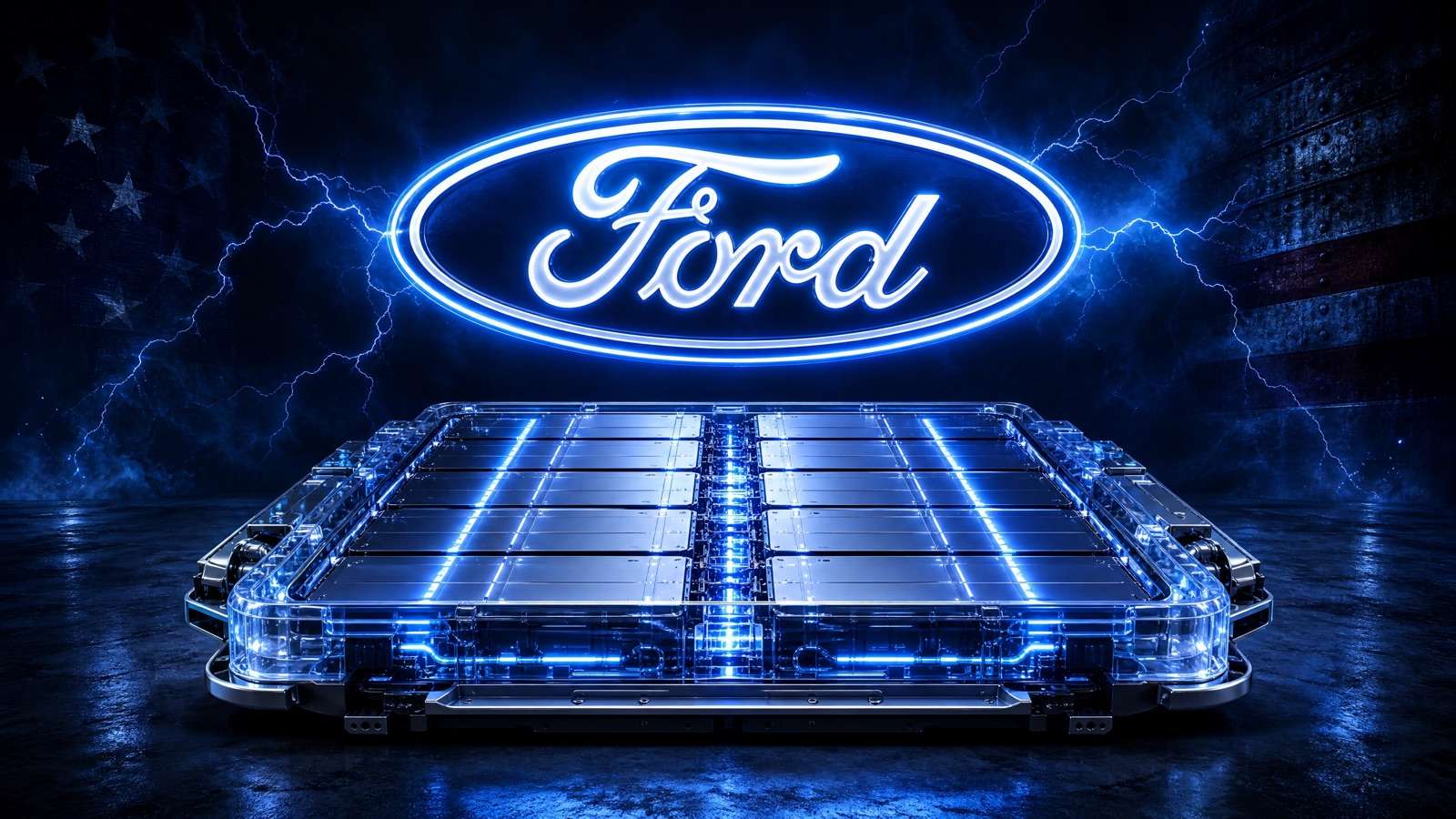
Ford uses pouch-format lithium-ion cells, flat flexible packets stacked into liquid-cooled modules, and splits its lineup by chemistry:
LFP (lithium iron phosphate) in standard range Mach-E models: cheaper, extremely long cycle life, happy at 100 percent daily charging, slightly less energy-dense.
Nickel-rich NCM in extended range Mach-E and Lightning packs: more energy per pound for maximum range and towing, managed with the usual 80 to 90 percent daily charging habit.
The Lightning pack doubles as a power plant: Pro Power Onboard outlets feed tools and tailgates, and Intelligent Backup Power can run an entire house through Ford's Home Integration System.
Ford Battery Specs by Model
Mustang Mach-E Standard Range: roughly 73 kWh usable (LFP), around 250 miles.
Mustang Mach-E Extended Range: roughly 91 kWh usable, up to about 320 miles.
F-150 Lightning Standard Range: roughly 98 kWh usable, around 240 miles.
F-150 Lightning Extended Range: roughly 131 kWh usable, up to about 320 miles.
Figures are approximate as of the 2026 model year; towing and heat change real-world results significantly.
Level 1 Charging: Fine for the Mach-E, Futile for the Lightning
A 120 volt outlet adds roughly 2 to 3 miles of range per hour. An overnight Level 1 session puts about 30 miles in a Mach-E, marginal but survivable for a short commute. Against a 131 kWh Lightning pack, Level 1 is close to pointless: a full charge would take most of a week.
Level 2 Charging: Where the Lightning Shines
The Mach-E accepts up to 11.5 kW on Level 2, roughly 25 to 30 miles of range per hour, a comfortable overnight refill. The extended range Lightning goes further: with Ford's 80 amp Charge Station Pro it accepts 19.2 kW, one of the fastest AC rates on the market, and that same hardware is the gateway to home backup power. Households without charging access use our scheduled home EV charging service to cover the routine.
The Mach-E peaks around 150 kW and the Lightning around 155 kW, with 10 to 80 percent sessions running 35 to 45 minutes. Ford vehicles also gained adapter access to the Tesla Supercharger network, which meaningfully expanded fast charging options along I-95 and the Turnpike. The habit that matters: precondition on the way, charge low-to-80, and skip the slow top-off.
If your Ford runs out on a job site, in evacuation traffic, or on the way to the ramp, call Rapid Charge EV at (954) 278-4454 or email support@myrapidchargeev.com. We dispatch across Broward, Miami-Dade, and Palm Beach 24/7.
Frequently Asked Questions
How big are Ford EV batteries?
As of the 2026 model year, the Mustang Mach-E carries roughly 73 kWh usable in standard range LFP form and about 91 kWh in extended range. The F-150 Lightning carries roughly 98 kWh standard and about 131 kWh in extended range, rated up to roughly 320 miles.
Can the F-150 Lightning really power a house?
Yes. With Ford's Home Integration System, an extended range Lightning's Intelligent Backup Power can run a typical home for about three days on a full charge, longer with rationing. In hurricane-prone South Florida, that is a generator that also drives.
How fast do Ford EVs charge?
On DC fast charging, the Mach-E peaks around 150 kW and the Lightning around 155 kW in extended range form, with 10 to 80 percent sessions in the 35 to 45 minute range. On Level 2, Mach-E accepts up to 11.5 kW and the Lightning ER up to 19.2 kW with the Charge Station Pro.
Should I charge a standard range Ford to 100 percent?
Standard range models with LFP chemistry are designed for it: Ford recommends regular 100 percent charges to keep the range estimate calibrated. Extended range nickel packs follow the usual rule instead, about 80 to 90 percent daily and 100 percent for trips.
BMW's i4, i5, i7, and iX share one battery philosophy. Here is how the Gen5 packs are built, what each model carries, and what Level 1, Level 2, and DC fast charging actually deliver. Call (954) 278-4454.
From the affordable Equinox EV to the 200 kWh Silverado EV, Chevy's Ultium batteries scale like Lego. Here is how the packs are built, what each model holds, and how fast they really charge. Call (954) 278-4454.
Lucid holds the EV efficiency crown, and its 900-volt battery architecture is the reason. Here is how Air and Gravity packs are built, what they hold, and how fast they really charge. Call (954) 278-4454.